
Vietnam #2
Norther and Southern Vietnam: Spirit and matter

Small note before starting: While I'm polishing the notes taken on the road before publishing I'm very upset. A few days ago I was making a stopover at one of the airports that were hit by drones in these hours. The feeling is that the world, this incredible place where there are still so many wonders to discover, becomes smaller and darker, in the hands of soulless beings who are literally destroying it. Having just been in a country that not so much time ago was devastated by the same superpower that today still repeats its cycle of horrors and violence in the name of economic gain shocks me. Why does history keep repeating itself? Are we beyond salvation as a species? Does it make sense to write, draw, create, talk about things we love? I don't know how to answer, but I decided to send this newsletter anyway, even if with a heavy heart.
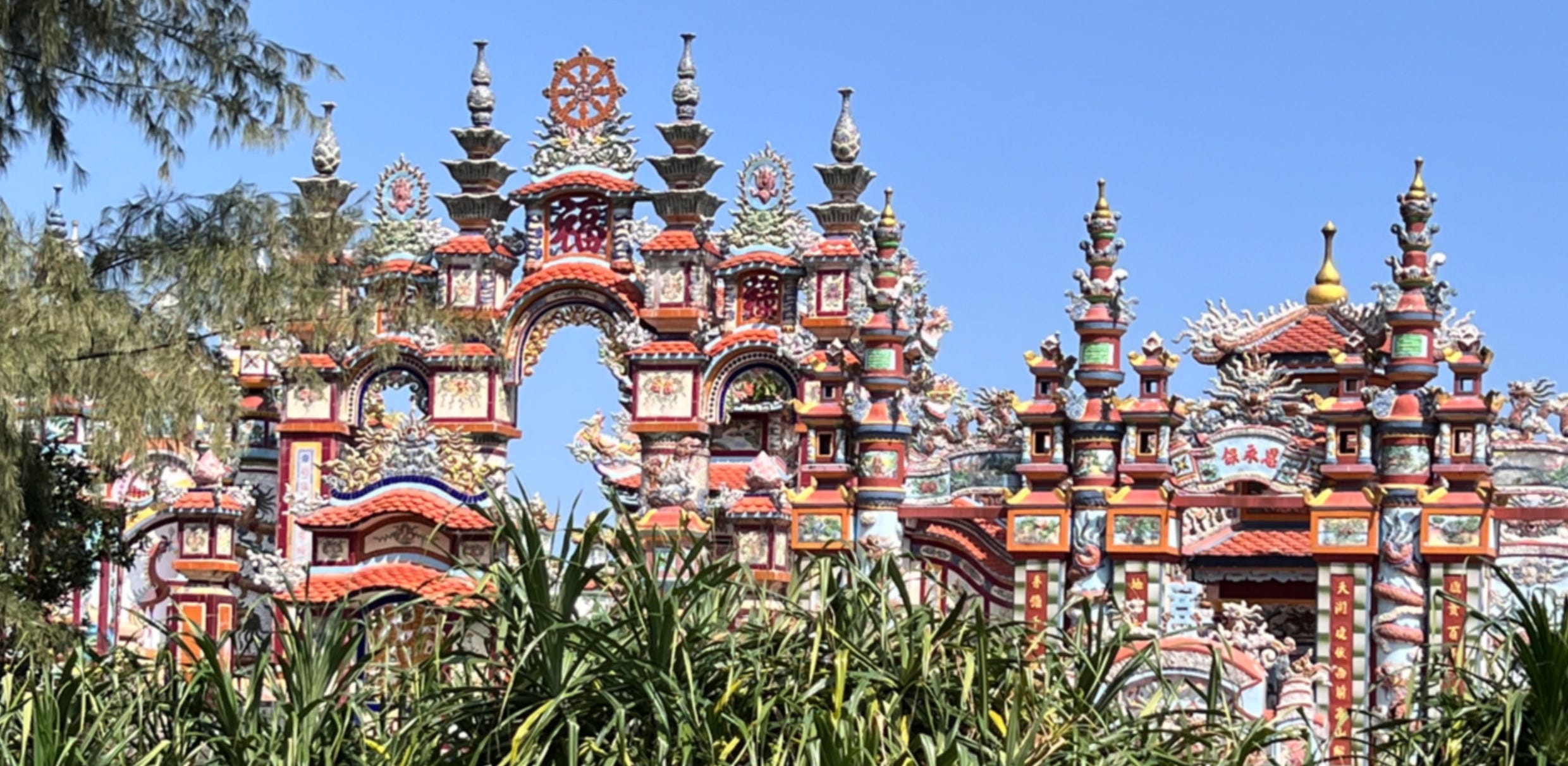
When I decided to go to Vietnam I didn't know the practice of burying loved ones in the fields and near houses (which I already mentioned in the first part). I knew of the existence of a sort of cemetery city in the Huế area, and it was one of the stops that I had organized with the greatest expectations. But I was not prepared for the depth of the relationship that the people of Vietnam have with the afterlife.
If you are passionate about this topic like me, this is the newsletter for you!
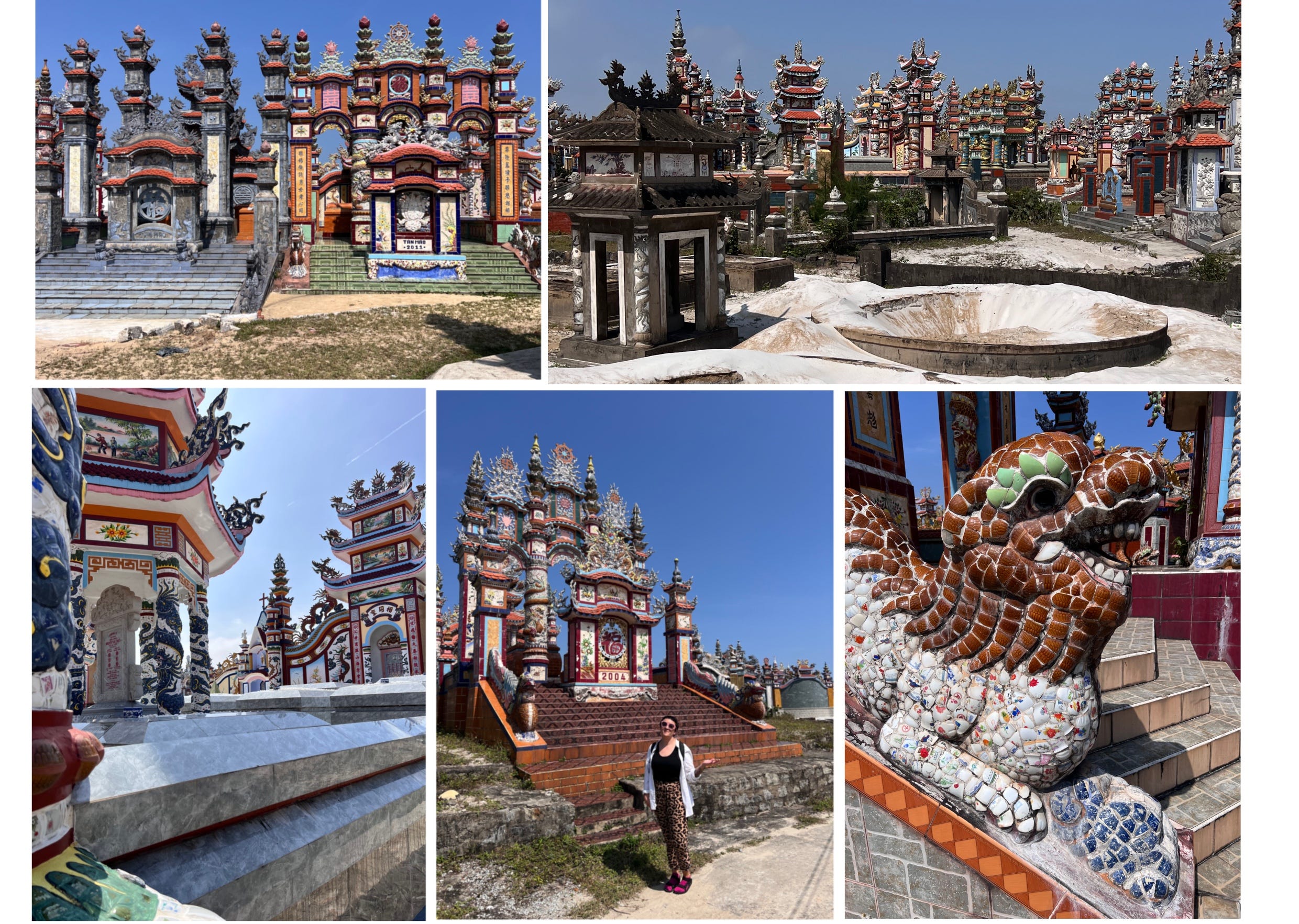
I would like to tell you about one of my favorite cities, Huế. Former capital of the empire, it is visited for its citadel and the opulent mausoleums of the Nguyễn emperors. But with a motorbike and about fifty minutes of dirt roads you can visit a tongue of lagoon land that runs along the China Sea leading to the City of Ghosts!
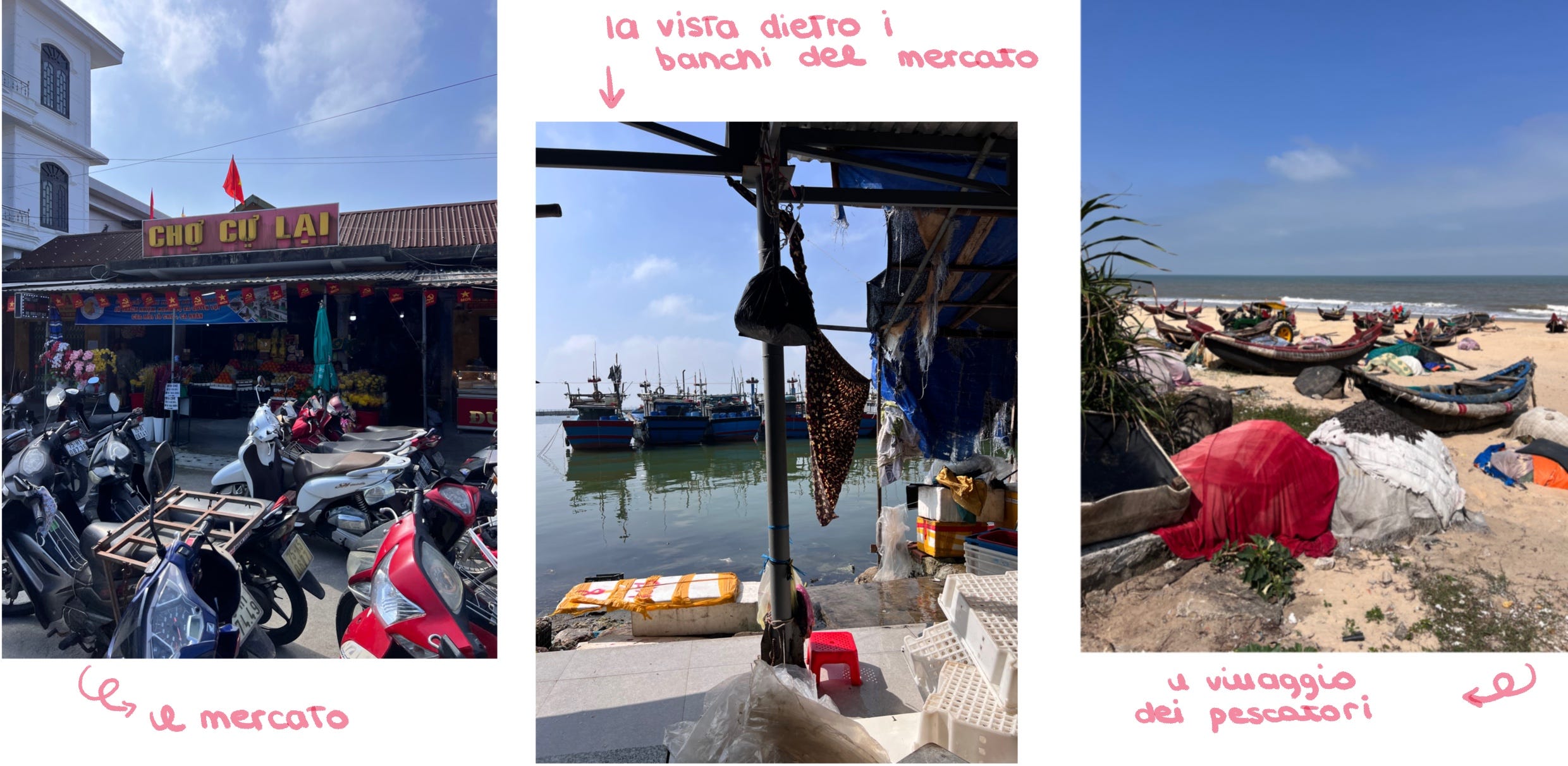
Small fishing villages follow one another along the coast, and next to each house there are small and large tombs, some looking like temples, others more modest. And here we also visited the smallest and certainly most authentic market of the whole trip: every seller greeted us and laughed at our face while we searched our way through basins full of fish still alive (🥲) and vegetables and fruit whose names I can't say. No one tried to sell us anything, they were just curious and amused to find us there.
The history of the city of ghosts has its roots in the phenomenon of "boat people". After the Vietnam War, or rather, at the end of the colonialist abuses of France and the American bombings that brought the country to its knees (which still got up to kick them in the ass), many people emigrated around the world in search of better luck. And here we return to the family and ancestral bond with the Vietnamese land: those who have moved away have returned at least to be buried, and if they have made enough luck, they have built what looks like a small pyramid! I'll leave you some photos. The place was amazing, but in the end the way to get there was the best part.
Visiting the country during the weeks leading up to the Têt, the most important holiday of the year, certainly contributed to highlight this spiritual side.
Lunar New Year is celebrated in most of Asia but in Vietnam it takes on a particular color. In the weeks preceding the Tết Nguyên Ðán the country is crossed by an energy that is felt in the air, flowers are displayed everywhere, offerings and incense are brought to the altars of every house, in the pagodas you can hear prayers and you can see fruit and food in front of the golden statues of Taoist deities.
One of the most curious traditions for me was to offer gifts to the dead through the smoke of small fires. Upon sighting yet another steaming metal container, I asked My, the owner of the homestay where we slept in Huế, for explanations. Paper representations of material goods, real effigies of toys, clothes, mobile phones, cars are set on fire these days so that extinct loved ones can receive them in the afterlife. I was a bit surprised by the strange "materialism" of this custom. In short, I hope not to need a new iPhone once I leave this land, but as always the perspective of a European is perhaps vitiated by the overabundance of material goods, and in general I do not believe that a judgmental attitude is ever appropriate when observing the traditions of an unknown country. But a problematic point is perhaps the air pollution that is added to the already very intense air pollution that is felt in big cities. Apart from all this, however, I found it really interesting!
White and yellow chrysanthemums (the colors of mourning), kumquat trees (which are never left without fruits, and for this reason they are considered auspicious), cherry branches (in the north of the country) fill every corner of the streets, the thresholds of houses and shops. The children receive red envelopes full of dong, the local currency, and from the day of the Tết begins a series of house-to-house visits in which people born in Vietnam who come from all over the world also participate, to pay tribute to their ancestors and their proud and beautiful land.
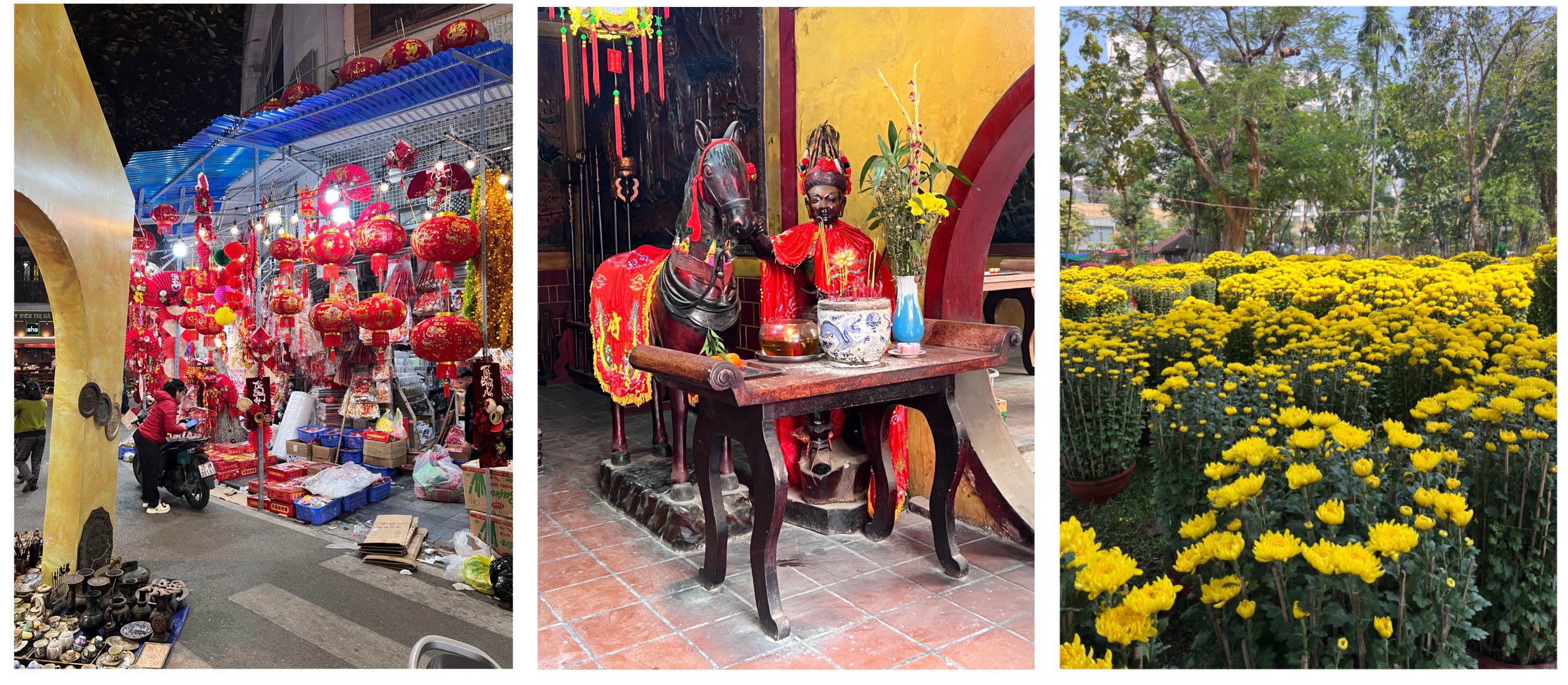
It would not have been the same trip without having seen these lively preparations, the streets overflowing with red lanterns and papier-mâché masks, the markets full of flowers, the pagodas that hosted wooden horses with incense always lit!
Perhaps the most fascinating part of the trip remains the discovery of the many alleys where life pours out of the houses, mixing with markets, motorbikes that never give rest and plastic stools.
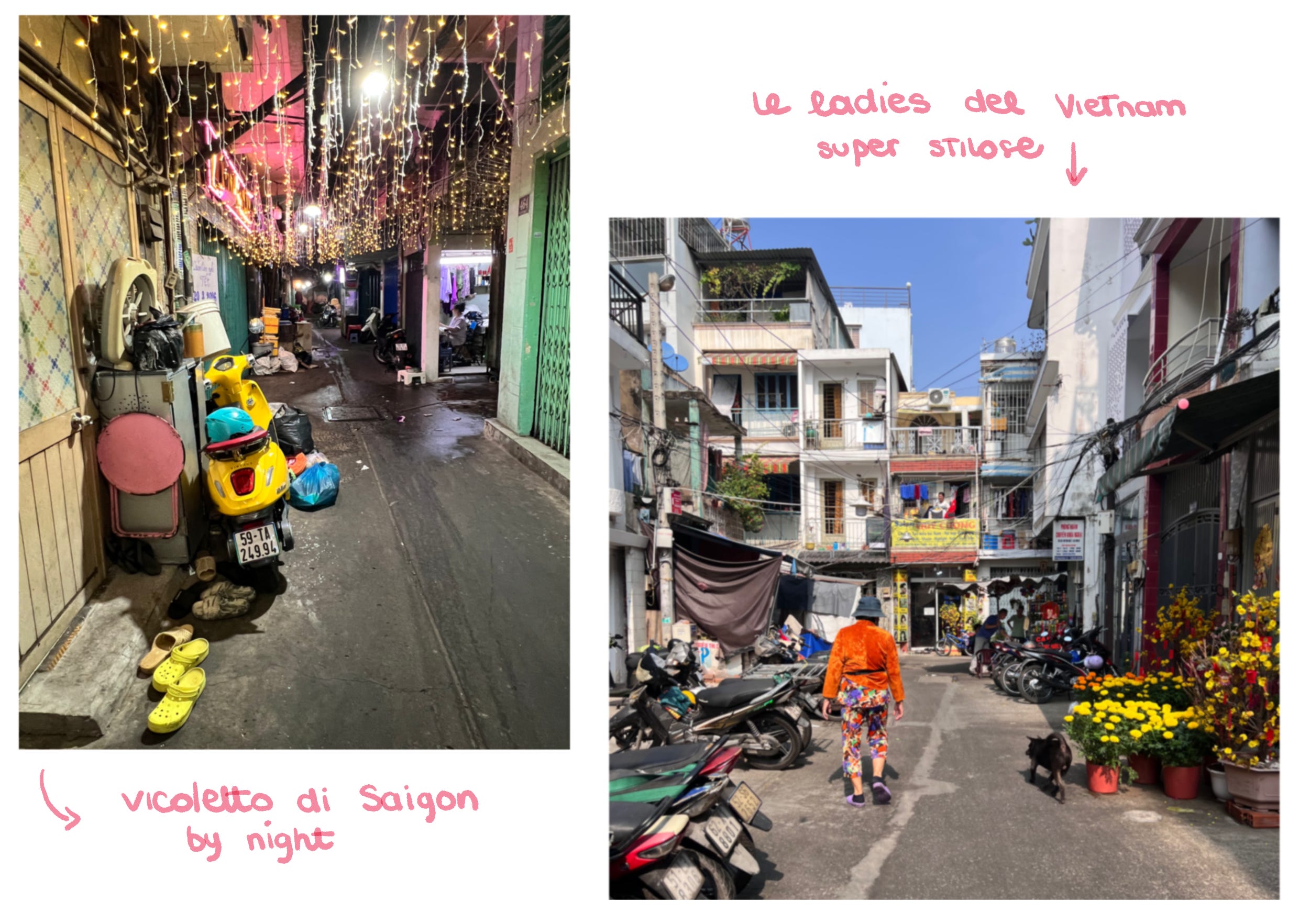
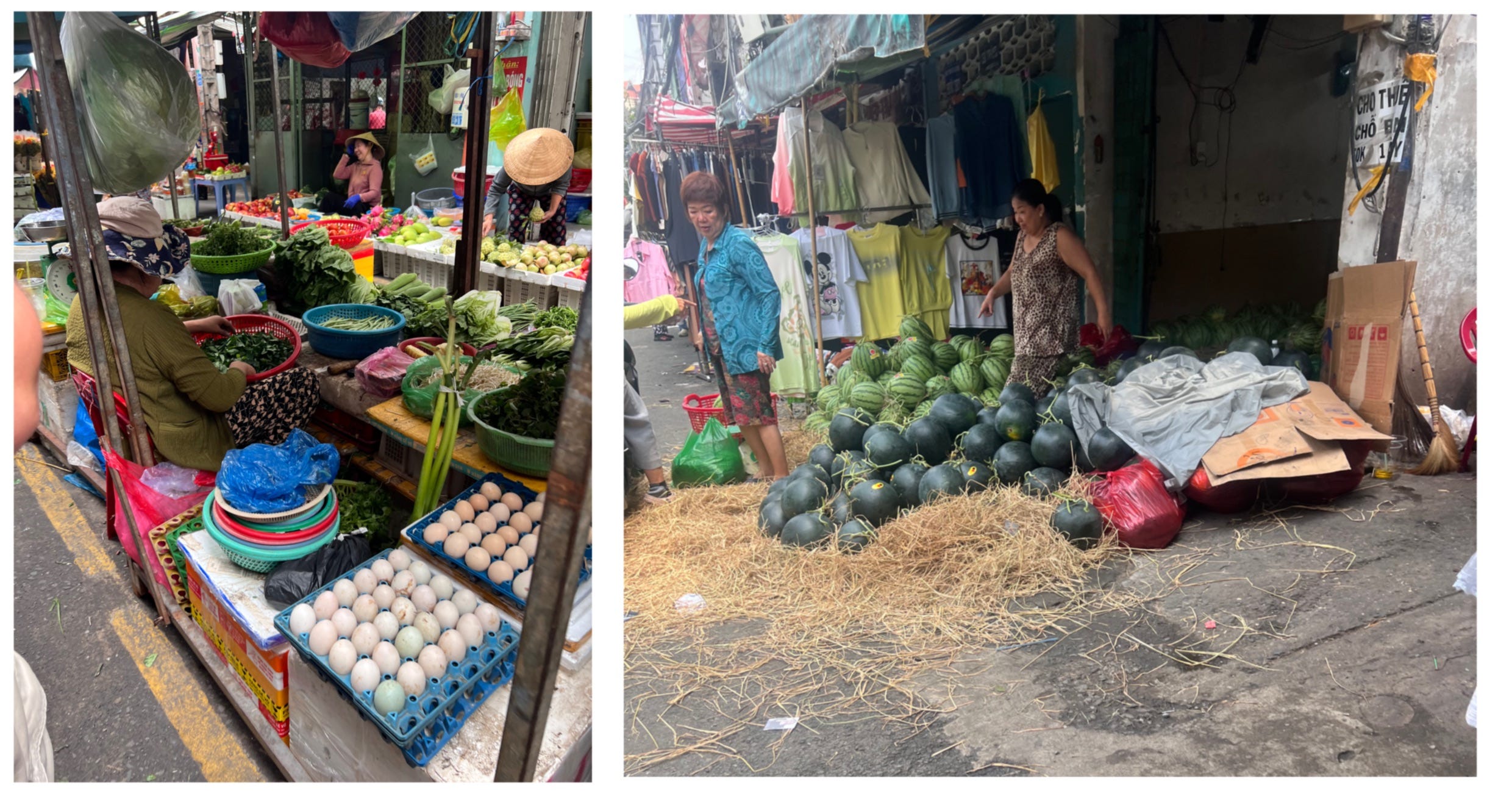
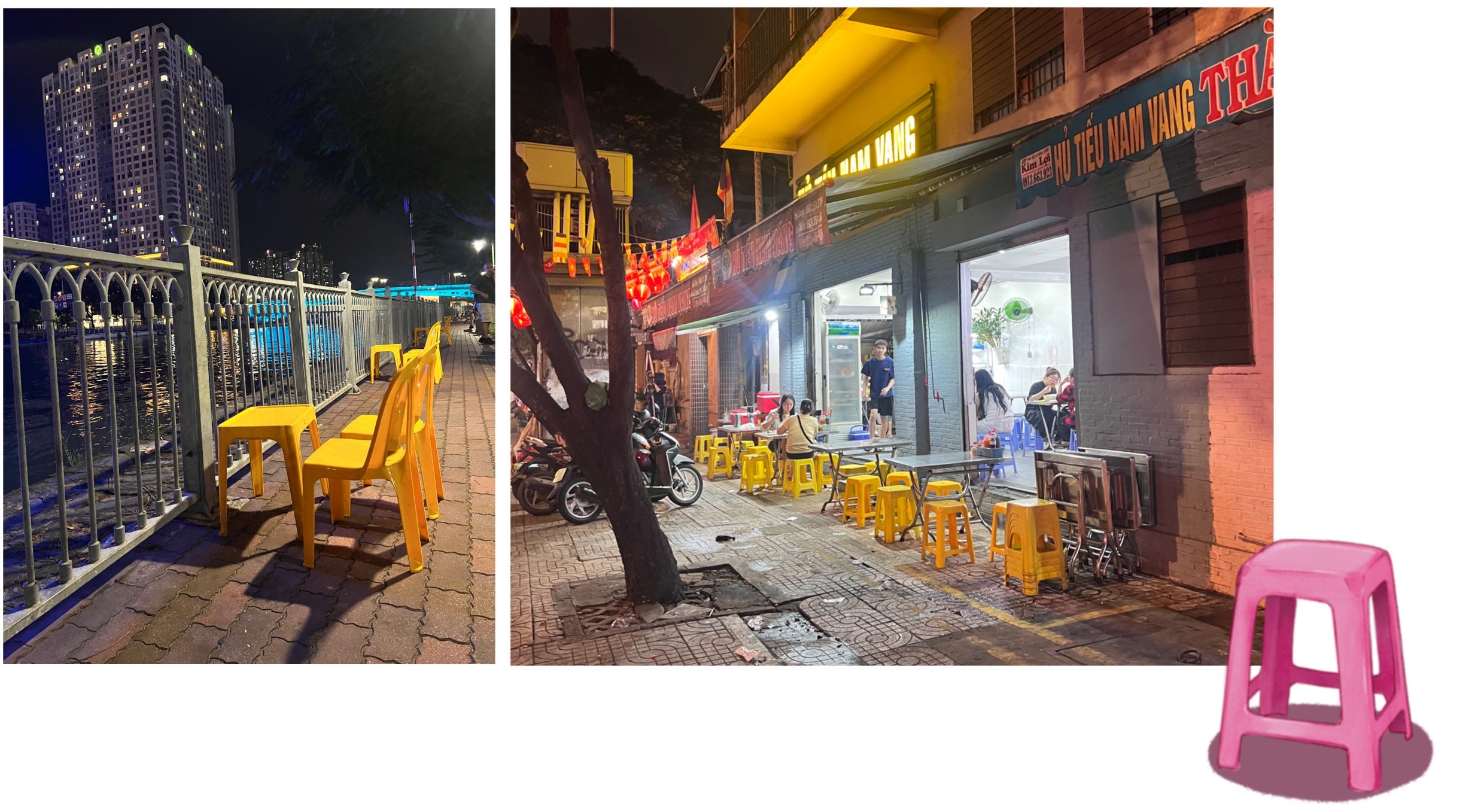
I want to think that there will again be a moment in which traveling, as well as a privilege, will again be an opportunity to know and discover what does not resemble us and get closer to new worlds instead of closing ourselves in our barbed wire boundaries.
Laura